
The Swan Chronicles Article #3
Article #3 of 4 in the series: Illinois Central College Doing Unprecedented Research
The pond at ICC is not just nice to look at but has a scientific purpose. In an interview with Pete Fandel, Professor of Agriculture, he discusses the reason the pond has set precedent for the rest of the country.
Hypoxia zones in the Gulf of Mexico are growing, and killing off natural wildlife. This is caused by a certain bacteria that dies or blocks oxygen from entering the ecosystem, and is mainly caused by runoff from the Mississippi. This runoff contains excess amounts of nitrogen and phosphorus from smaller ponds and creeks that eventually feed into the gulf. The United States Department of Agriculture(USDA), ran a study that found Illinois and Iowa were the highest contributors for this number due to the amount of agricultural runoff from our states.
To combat this issue, Fandel states that the Environmental Protection Agency has given ICC funds to create data solving this issue.
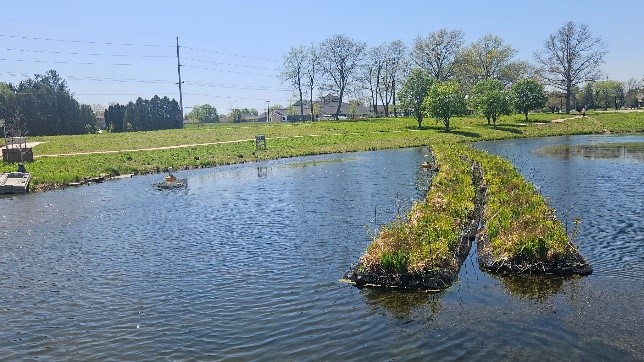
Solving the hypoxia problem plaguing the United States starts right here in East Peoria. Fandel has established himself as an innovative agriculturist, with previous experiments like the artificial wetlands done on campus. The plan was to create islands of natural plants to sit on top of the water. The roots from these plants ideally would suck up the nitrogen and phosphorus before it flowed into a creek that would lead to the Mississippi.
With the funding for this project, the timeline faltered slightly. What was supposed to be started in 2022 and completed in a year was completely derailed. The reason the project went off track was because of the villains of this series. The the geese were the first roadblock. The pond’s unofficial name of Goose Poop Lake was very true, and upset the results of the experiment. The feces put too much nitrogen into the water where the roots could not soak more up, or they would fly past the island where the water had already been processed. This was before the heroes, the swans, were implemented.
A second large roadblock in the way was the plants. It took the roots months away from the timeline to actually grow long enough to reach the water. Fandel states his students would poke fun at him, because he would personally boat out there four days a week for two months and water the plants by funneling water from the lake. Many other people thought he was just a gardener doing maintenance, rather than tending to a possible federally implemented irrigation system.
The third roadblock faced was weather. Spring break of 2025 showed promise of getting this experiment off the ground, but there was a long drought. According to Fandel, the water in the lake dropped at an astounding two feet. Because of this, the sensors picked up a larger concentration of everything in the lake that did not evaporate, including the chemicals, leading to hypoxia.
The photograph below shows one of the sensors protruding from the water. These chemical sensors were placed before the water flowed through the island of plants, and one afterwards. From comparing the results of the sensors, data can be extrapolated and used to prove the experiment worked.
“It’s caught a lot of attention since it’s kind of a new concept.” Fandel said.
Fandel is confident that the final numbers will reflect a groundbreaking system for farmers and irrigation systems all over the country. Once the USDA can confirm the islands of plants are beneficial to preventing hypoxia, it will be implemented in farm lakes and ponds all over the U.S., but specifically helpful to the Midwest and channels that lead to the Mississippi.
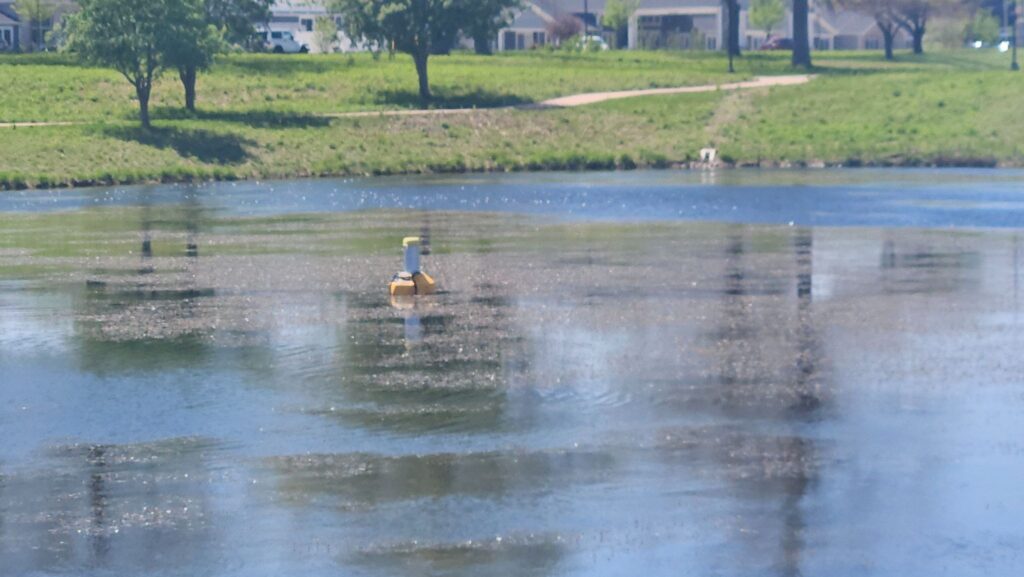
Data collecting sensors on ICC pond. Photo by Catherine Steider